Agility training is one of the most rewarding activities you can share with your Siberian Husky. These intelligent, energetic dogs were bred to pull sleds over long distances, which means they have incredible stamina, a love for movement, and a strong problem-solving instinct. Agility channels that energy into a fun, structured sport that strengthens your bond, provides mental stimulation, and keeps your husky physically fit. Whether you dream of competing or just want a backyard activity, this guide covers everything you need to get started.
Why Agility Training Works for Huskies
Siberian Huskies are not typical obedience dogs. They are independent, strong-willed, and easily bored. Traditional repetitive drills often fail. Agility, however, offers variety, speed, and challenges that appeal to their natural drive. The sport mimics the decision-making and endurance required in sledding, with quick turns, jumps, and tunnels. It also builds trust and communication because you and your husky must work as a team. Many huskies who struggle with loose-leash walking or recall thrive in agility because the obstacles become a reward for focus.
Prerequisites: Before You Start
Basic Obedience Foundation
Your husky should reliably respond to a few cues: sit, down, stay, come, and a solid "leave it." Agility requires impulse control, especially around the start line and while waiting for your signal. If your husky hasn't mastered these basics, spend two or three weeks reinforcing them in low-distraction environments. A 6-month-old puppy can begin foundation exercises, but wait until the dog is at least 12–18 months old for full-height jumps and heavy impact obstacles to protect growing joints.
Physical Health Check
Visit your veterinarian for a hip and elbow evaluation. Huskies are prone to hip dysplasia and patellar luxation. Agility involves sharp turns and landings, so you need to know your dog's physical limits. Also check for eye issues like cataracts, which can affect depth perception. A healthy husky can run agility into their senior years if care is taken.
Equipment You'll Need
To start, you don't need a full competition set. Here's a starter list:
- Adjustable jumps – PVC or wooden bars with cups to set height. Start with the bar on the ground.
- Tunnel – A collapsible fabric tunnel (5–10 feet long). Hold it open with sandbags.
- Weave poles – Six poles spaced 24 inches apart. Many trainers recommend plastic poles that bend if hit.
- Contact obstacles (optional) – A small dog walk or plank for beginning. Use a low height (3–6 inches).
- Treat pouch and high-value rewards – Bits of chicken, cheese, or freeze-dried liver.
- Flat collar or harness – Avoid prong or choke collars; safety is paramount.
- Non-slip mat – To protect your husky's paws on hard surfaces.
You can build your equipment or buy second-hand sets. The table below shows approximate costs:
| Item | New Price | DIY Price |
|---|---|---|
| Set of 4 jumps | $80–$150 | $20–$40 |
| Tunnel | $40–$80 | $15–$25 |
| Weave poles (6) | $30–$60 | $10–$20 |
| Contact plank | $50–$100 | $20–$30 |
Setting Up Your Training Area
You need a safe, enclosed space. A fenced backyard is ideal. If using a park, ensure it's quiet and your husky is under control. The surface should be grass or dirt to reduce joint impact. Avoid concrete or asphalt. Set up one obstacle at a time until your dog understands each piece. A standard beginner layout might be: jump, tunnel, short straight line, then a single weave pole.
Position the equipment in a U-shape or L-shape so your husky can see you throughout. Use flags or cones to mark the start line. Keep sessions short – 5 to 10 minutes maximum – to maintain enthusiasm. Huskies get bored quickly; end before your dog loses interest.
Introducing Basic Obstacles
Jumps
Start with the bar on the ground. Lead your husky over it with a treat. Say "over" or "hop" as they step across. Once comfortable, raise the bar 2–4 inches. For a full-size husky, competition height is 16–24 inches, but never exceed your dog's shoulder height during training. Reward calm approaches – eager huskies often try to run through jumps, so teach a collected stride. Use jump wings (vertical boards) to encourage a straight line.
Tunnels
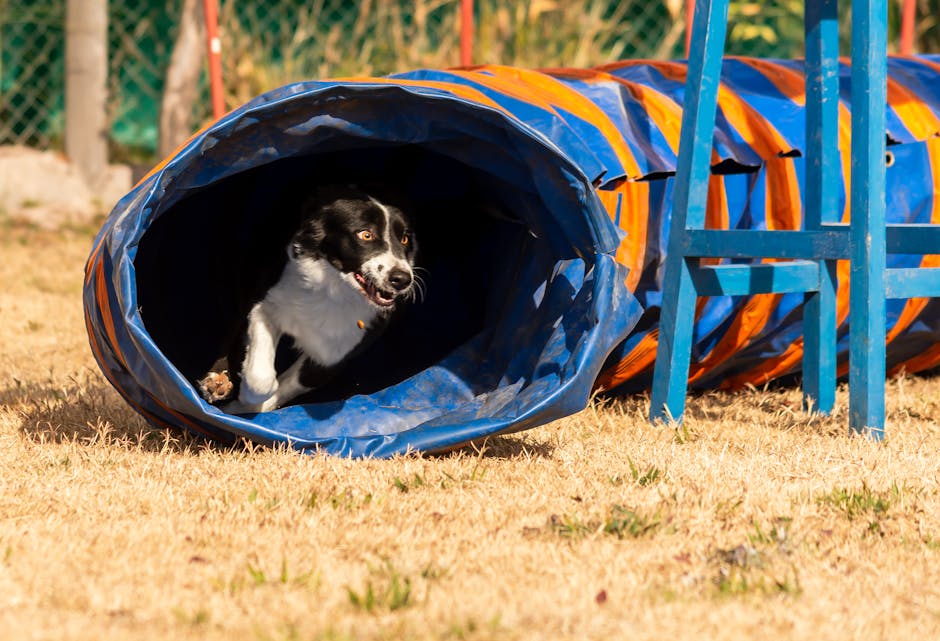
Many huskies love tunnels because they feel like a game. Shorten the tunnel to a few feet and hold it open. Toss a treat through; encourage your dog to enter. Once they go in, praise heavily. Gradually extend the tunnel length. If your husky hesitates, stay at the entrance and call excitedly. Never force them – a fearful experience can create a long-lasting phobia.
Weave Poles
Weaving is the hardest skill for many huskies, as it requires tight body control and patience. Use the "channel method": set poles at a wide angle (like a slalom), with each pole spaced 24 inches apart. Guide your husky through with a treat. Slowly close the angle over days until they weave in a straight line. Reward each successful entry. Some huskies pop out after pole 3; if that happens, slow down and guide them back. Use verbal cues like "weave" or "pole."
Contact Obstacles (Dog Walk, A-Frame, Teeter)
For safety, keep contacts low and slow. Teach a two-on/two-off position by having your husky place front paws on a low plank and treat. Gradually raise the plank. The running contact (dog runs over the contact zone) is advanced – beginners should stop and treat on the down ramp.
Sequencing and Handling
Once your husky is confident with three obstacles individually, link them in a sequence of two. For example: jump to tunnel. Always reward at the end of a sequence. Use directional cues ("left," "right") and your body language. Huskies are visually sharp; they respond better to arm signals than voice commands in motion. Practice front crosses (changing sides in front of your dog) and rear crosses (behind) to teach turns.
A common beginner sequence: jump – tunnel – weave poles – jump (return). Keep lines flowing and avoid sharp 90-degree turns at first. Your goal is to build a happy, fluent partner.
Keeping a Husky Motivated
Huskies are notorious for deciding when to work. The key is to make agility a high-value game. Use toys, squeaky balls, or a favorite tug as rewards. Mix up the treat value: save the best for difficult obstacles. Vary the sequence order so it doesn't become predictable. Play short games of "chase" between runs. If your husky stops and sniffs, call them back with an excited voice – don't nag. Some huskies respond to a release word ("break!") after a successful sequence.
Remember that heat and endurance matter. Agility on a hot day will cause a husky to quit. Train early morning or late evening. Keep water available and offer a splash after each run.
Common Mistakes to Avoid
- Raising jump heights too fast – Leads to knocking bars and frustration. Master 4–6 inches first.
- Overusing the same reward – Husky gets bored. Rotate between cheese, chicken, and toys.
- Training for too long – 10 minutes max. Quality over quantity.
- Ignoring the start line – A husky that breaks before you signal will never be reliable. Practice a 10-second stay.
- Using harsh corrections – Huskies shut down. Positive methods only.
- Skipping warm-up – Always let your dog trot, stretch, and do a gentle recall before the first obstacle.
Advanced Training and Competition
Once your husky can complete a 5-obstacle course smoothly, consider joining a local agility club. Many areas offer AKC or UKI trials. Huskies are not the fastest breed, but they can be accurate and consistent. Advanced work includes distance handling, lead-out pivots, and complex weaves (12 poles). You may also introduce the A-frame (5.5–6.5 feet high) and the teeter-totter. Always ensure your husky is physically ready. Some huskies peak at 3–5 years old.
Safety Considerations
Huskies have a double coat that makes them prone to overheating. Watch for heavy panting, drooling, or stumbling. Stop immediately and cool your dog. Do not run agility when the temperature exceeds 75°F (24°C). Provide shade and water. Check paws for cracks or cuts after each session. Use paw wax if training on abrasive surfaces. Also monitor for signs of hip or back pain – limping, reluctance to jump, or a stiff tail.
Conclusion
Agility training is an excellent outlet for your Siberian Husky's boundless energy. With patience, consistency, and a playful attitude, you can teach your dog to navigate jumps, tunnels, and weave poles while deepening your teamwork. Start slow, prioritize safety, and celebrate small victories. Whether you eventually compete or just enjoy backyard fun, the bond you build will be worth every step. Now grab some treats, set up a jump, and let the adventure begin!